
 This Thursday, November 25, most Americans will be sitting down to a Thanksgiving meal, with approximately 95% eating some form of turkey. The National Turkey Federation (NTF) estimates that 46 million turkeys are eaten on Thanksgiving. At an average weight of 15 pounds per bird, this adds up to approximately 690 million pounds of turkey in a single day. But how much protein is in that turkey? LECO took a look.
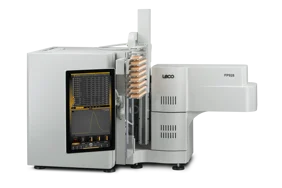 The FP928 is a nitrogen/protein determinator that uses macro samples (up to 3 g) in a horizontal combustion furnace. It is well-suited for analyzing protein in meat samples. By determining the nitrogen amounts in a meat sample and applying an appropriate multiplier (commonly 6.25), protein levels can be easily determined in a short, 5-minute cycle. With a 100-position autoloader and mobile software app for your phone, the FP928 can be loaded and set to run without needing constant supervision or action.
LECO ran samples of turkey, ham, bacon, and hot dogs through the FP928 to find average protein levels of common meat sources. With approximately 17% protein, turkey came in at around the same protein content as ham, but with much less fat, making it a lean and healthy choice for the holiday.